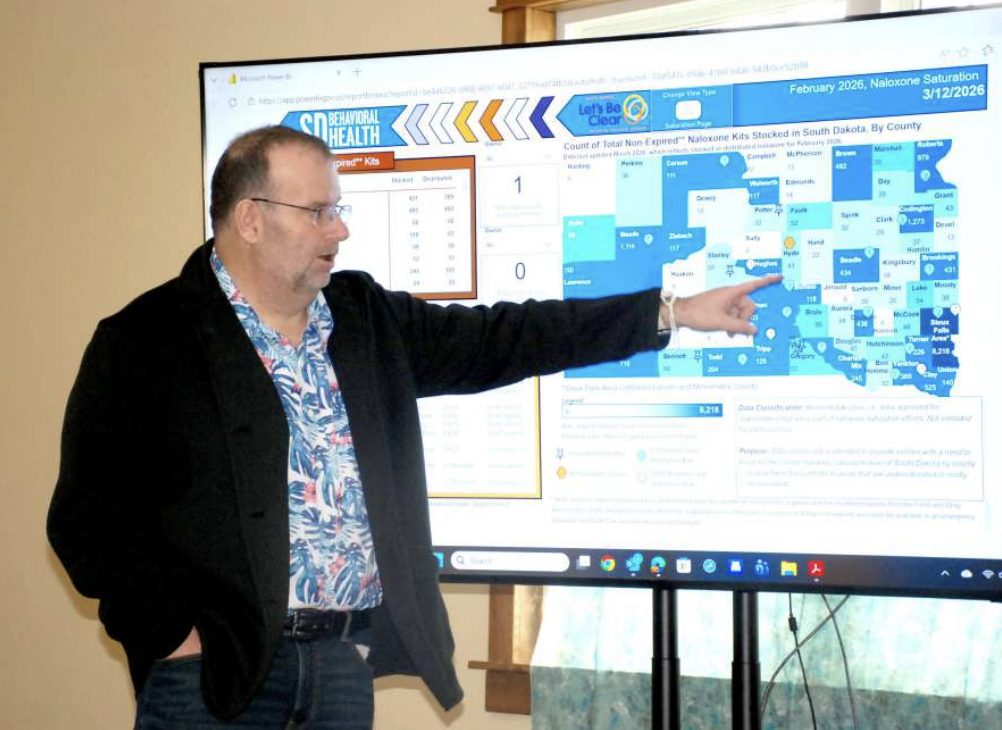
NEWELL- The Western Resource Center was represented by Bill Elger at the local Whatever It Takes (WIT) Coalition luncheon March 12 at the Newell Christian Fellowship. Elger was on hand to explain recent South Dakota drug overdose data reported by the SD Dept of Health.
Also, as part of the main topic, Elger went into some detail about the use and necessity of Narcan kits in opioid overdose episodes.
He is part of the Overdose Drug Task Force and has firsthand knowledge working with drug use in South Dakota and Wyoming. Education is the key to prevent accidental overdose and limit opioid drug use, he stated.
Elger continued with interesting statistics in drug use in South Dakota, identifying Fentanyl and the highly addictive Carfentanil, which is 100 times more potent than heroin. Carfentanil is especially dangerous due to its rapid onset. Symptoms can develop within minutes of exposure. The body cannot safely tolerate any amount of the drug. The toxicity has been compared to nerve gas.
According to the State Unintentional Drug Overdose Reporting System (SUDORS), from 2020 to 2024, there were 357 unintentional and undetermined overdose deaths in South Dakota. There were 73 deaths in 2024, a 12% increase from 2023. Elger said that there is a major problem in the reporting of unintentional overdose deaths, as there is no set formula for reporting. The type of overdose isn’t always known, but the most common overdose category was overdose related to substance use/misuse. It may be caused by accidentally ingesting the drug or an excessive dose of a drug, or even overdosing while taking a prescription dosage.
Opioids and stimulants account for the greatest proportion of overdose deaths in South Dakota. Fentanyl was the most common opioid involved in unintentional overdose deaths.
Western and Central regions of the state had higher percentages of methamphetamine-related deaths than opioid-related deaths. Males make up the largest group. Overdoses impact all age groups, but adults aged 35 to 44 years had the highest proportion and rate of overdose deaths. Sixty-three percent were white, 29% American Indian, and 8% included Black, Asian, or unknown. American Indians died of overdose deaths 4.4 times higher than whites.
Elger pointed out the opportunities for intervention. Over 60% of overdose deaths had at least one opportunity for intervention. These opportunities include a potential bystander during or preceding the overdose, a known mental health diagnosis, having received treatment for substance use disorder, the fatal drug use was witnessed, or a prior overdose event was reported. A potential bystander was present in 43% of these deaths, showing that there was opportunity to provide life-saving actions.
Signs of a Carfentanil overdose include immediate dizziness and shallow breathing, followed by pinpoint pupils and cold, clammy skin. Rapid progression leads to severe respiratory depression and unconsciousness.
Bystander response to an overdose includes calling 911 and/or performing CPR. Elger highlighted the utilization of Narcan and the importance of having Narcan kits available to the public. Butte County has a slightly lower saturation of Narcan kits than other parts of the state. It’s important to have the kits available in public places, ready for use and to education people in their use.
“As long as you are doing it legit,” he said, there can’t be any civil or legal complaints against using the Narcan because of the Good Samaritan Laws. He also added that as long as the person is breathing, there is the window of opportunity for survival.
Narcan (Naloxone) can be effective in treating drug overdoses. Multiple doses are often necessary for Carfentanil’s extreme potency.
A Narcan kit can be obtained without a prescription and can be requested from a pharmacy. Elger also had some available for those in attendance. He urged education as the best way to curtail drug overdose and handle the situation.
Substance use disorder is a treatable disease. Visit the Let’s Be Clear website (letsbeclearsd. com) to view resources and learn more.
Sabrina Harmon, on behalf of the WIT Coalition, sponsors several community education meetings a year. She can be reached at sabrina.harmon.wit@ sdplains.com or 605-381-9136.
Read the full issue of the Belle Fourche Beacon by clicking here.